All articlesSafety

When a Tyre Is Scrap

A puncture can sit perfectly inside the T-zone and the tyre can still belong in the bin. The repairable zone tells you whether the hole can be fixed. The casing tells you whether the tyre is worth fixing. This is the list of what sends the whole tyre to scrap, regardless of where the puncture is.

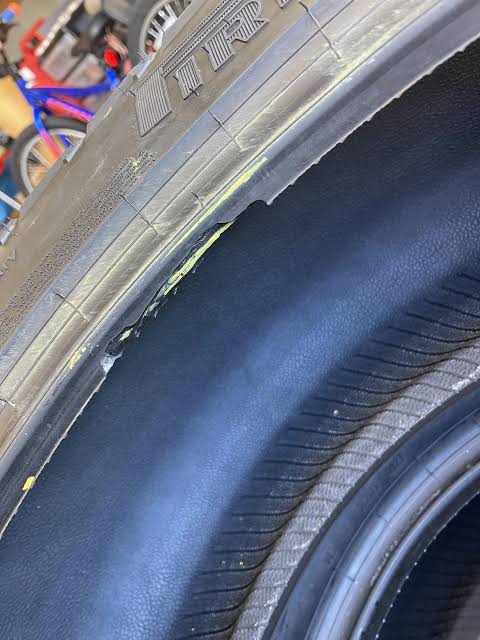
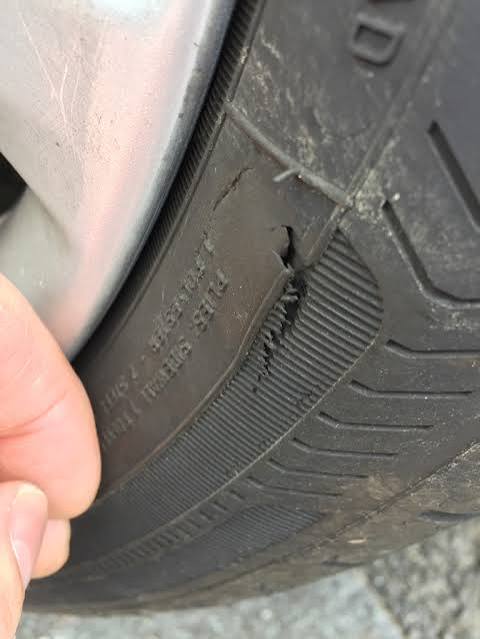
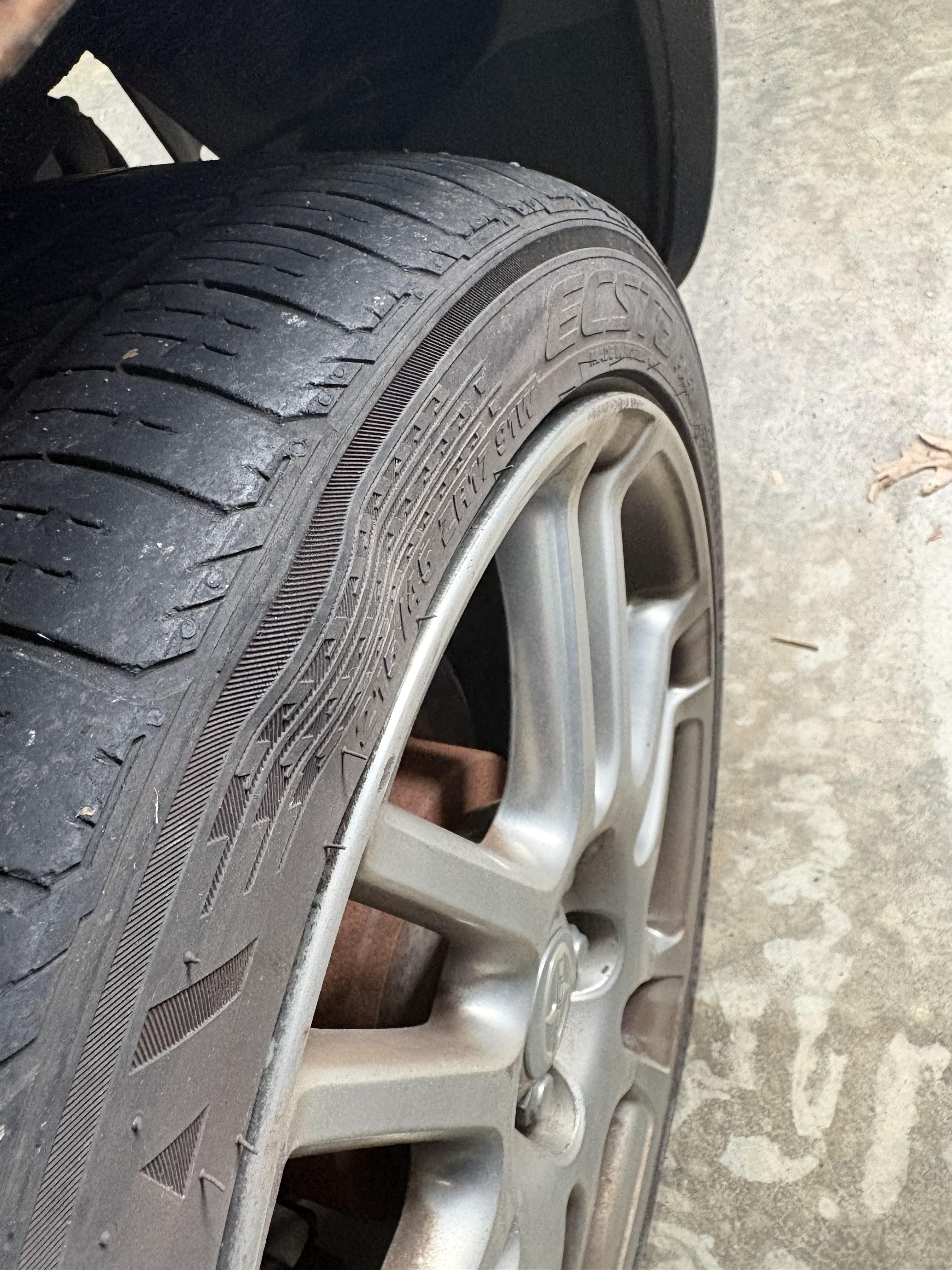
  • Sidewall or shoulder damage. Any puncture, cut or bulge outside the T-zone. These areas flex and a repair there won't hold.
  • Close-up of a jagged tear in a tyre sidewall near the shoulder, exposing fibrous casing material beneath the rubber.
    A tyre sidewall with a clear indentation and wavy distortion indicating internal structural failure.
    Sidewall and shoulder damage like this is not repairable, no matter how small the tear looks.
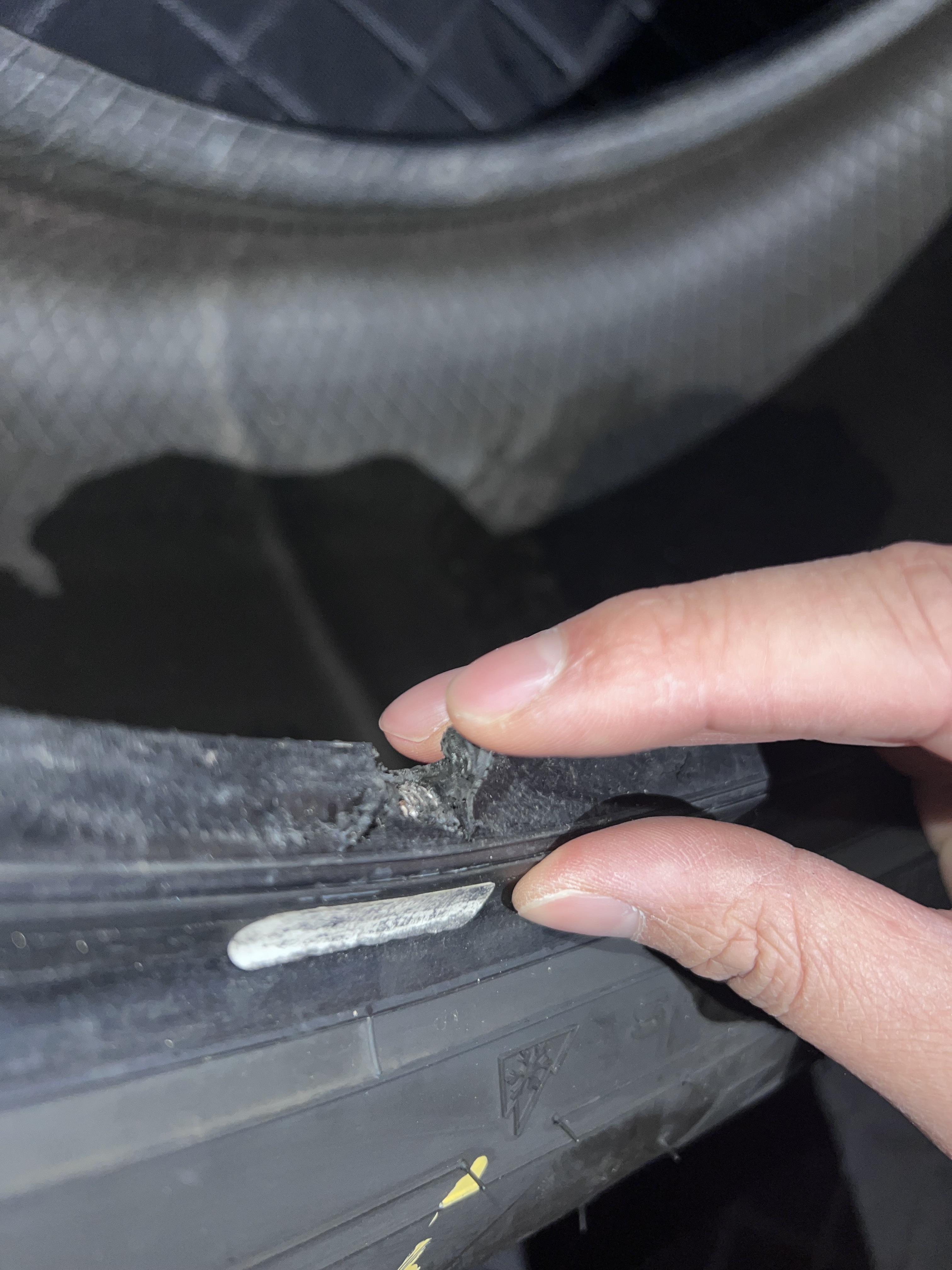
  • Bead damage. A torn or distorted bead won't seat and seal on the rim safely. If the bead is chewed up from a botched dismount, the tyre is done.
  • Close-up of a jagged tear in a tyre bead, exposing dark fibrous structural material beneath the rubber.
    A hand pulling back torn rubber at a tyre bead to reveal the underlying steel wire and casing cords.
    A torn bead won't seat and seal on the rim. Once the bead is chewed up, the tyre is done.
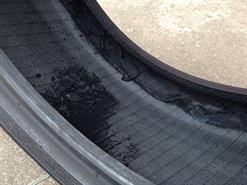
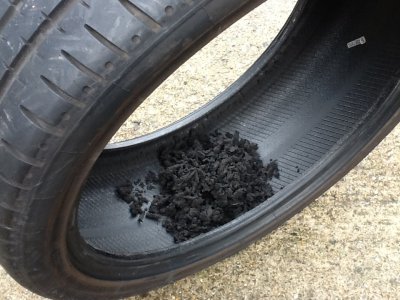
  • Run-flat casing damage. A tyre driven under-inflated or flat has overheated and delaminated internally, even if it looks fine from the outside. The damage is inside the casing where you can't see it until the tyre comes off the rim.
  • Looking into a tyre casing showing a build-up of pulverized black rubber debris on the inner liner from run-flat damage.
    Accumulated rubber dust and shredded debris inside a tyre that has been driven flat, evidence of internal delamination.
    Rubber dust shed inside the casing means the sidewalls have been grinding together under a flat load. The tyre is scrap.
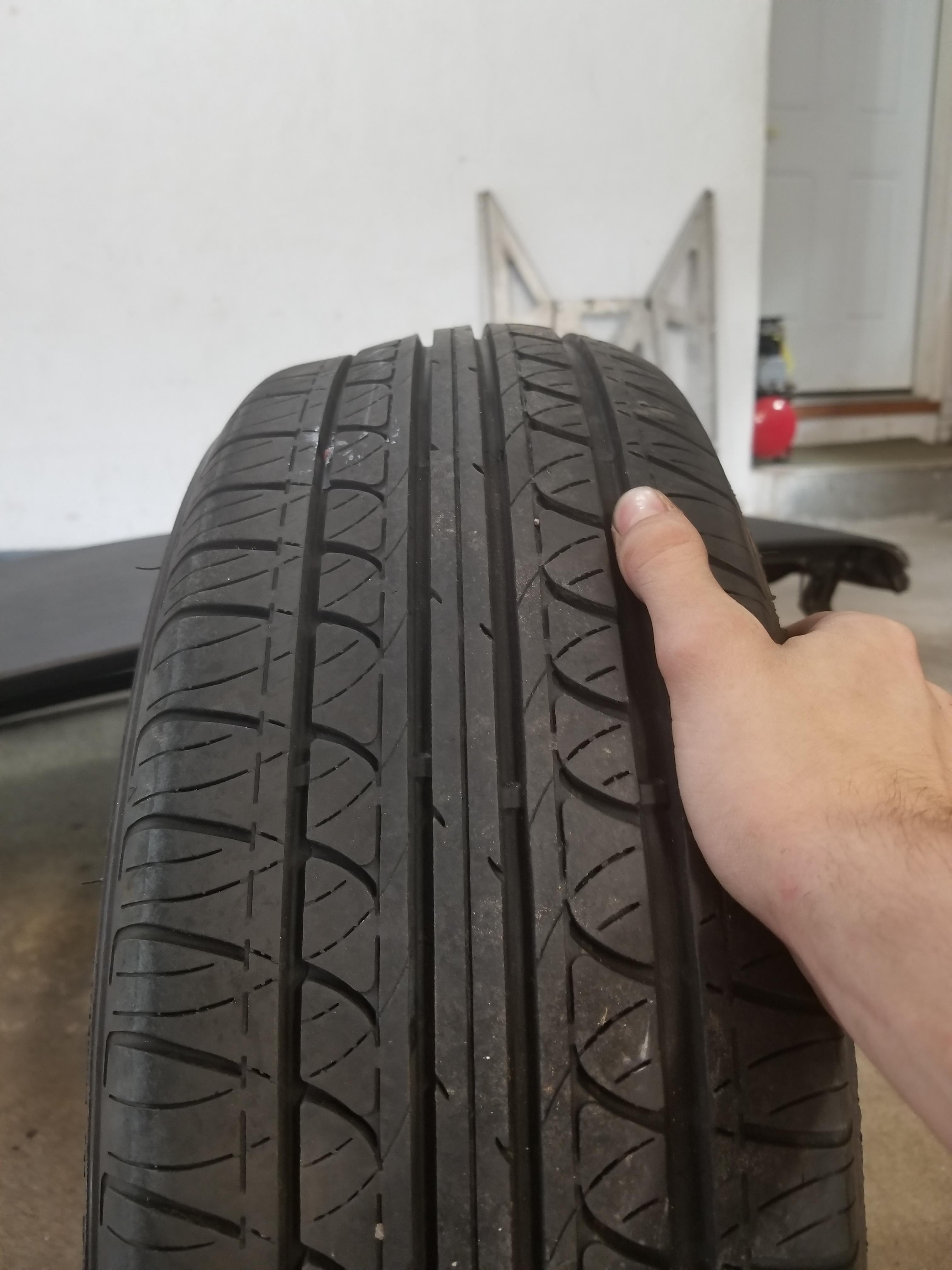
  • Exposed or bulged casing plies. The structural cord is visible, or the casing has a lump that means the belt has shifted. The structure has already failed.
  • Close-up of a tyre tread shoulder showing a worn, abraded groove with frayed rubber and exposed belt material.
    Top-down view of a tyre tread with a thumb pressing near a damaged edge, showing exposed fibrous casing material.
    Exposed or bulged casing plies mean the structure has already failed. The tyre is scrap.
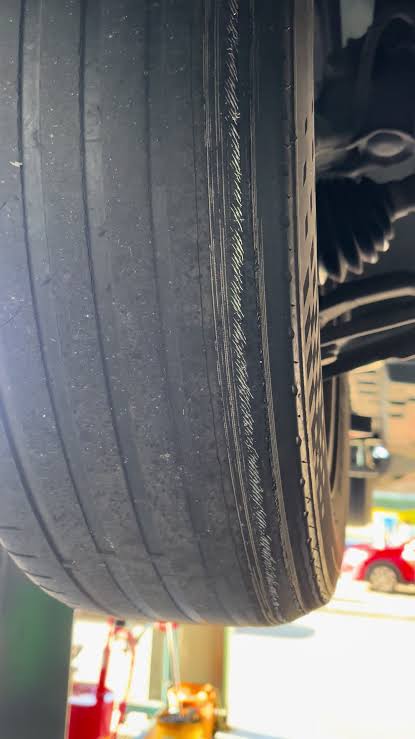
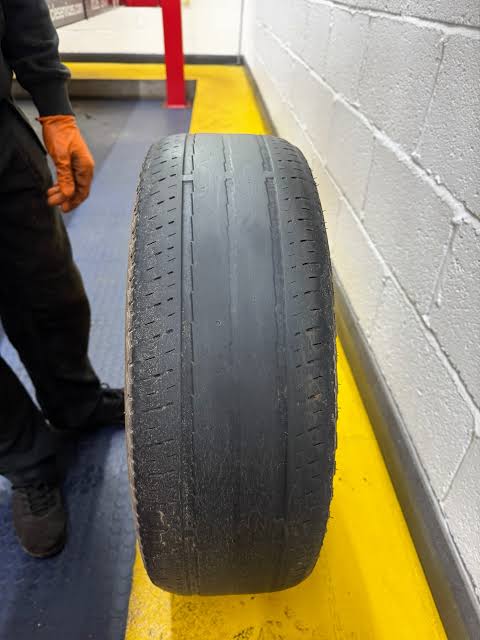
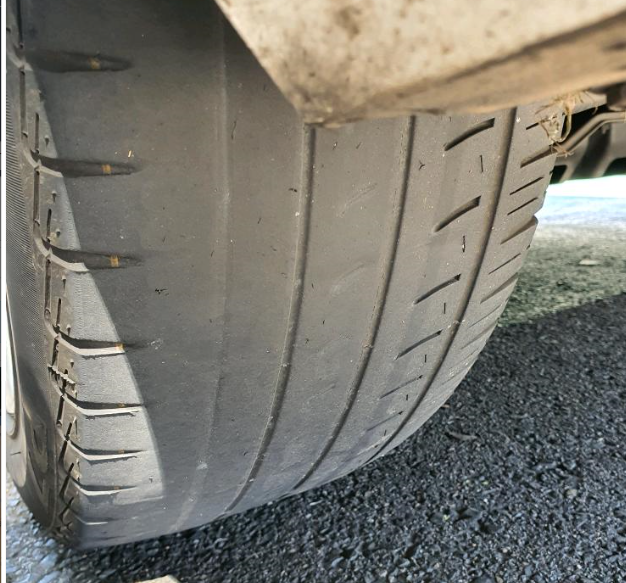
  • Tread depth below the wear limit. Repairing a tyre that's nearly illegal is false economy. The customer is paying for a repair on a tyre they'll replace in weeks.
  • Top-down view of a bald tyre worn almost smooth across the centre, with only shallow grooves remaining at the edges.
    Angled close-up of a tyre with a slick bald centre tread while the outer shoulder still holds some groove pattern.
    A tyre at its wear limit is already in need of replacement. Repairing it is unsafe.
  • A previous repair outside the limits. A tyre already repaired in the shoulder, or patched twice in the same spot, has used up its repair allowance.
Is the puncture repairable? →How a repair is done →

Looking for a specific vehicle?

Search wheel nut torque specs →