
A screw in the tread doesn't automatically mean a repair. The first call is whether the puncture is even in a repairable spot, and that's set by where it sits, how big it is and the angle it went in. Get this wrong and you put an unsafe tyre back on the road.
The repairable zone (the T-zone)
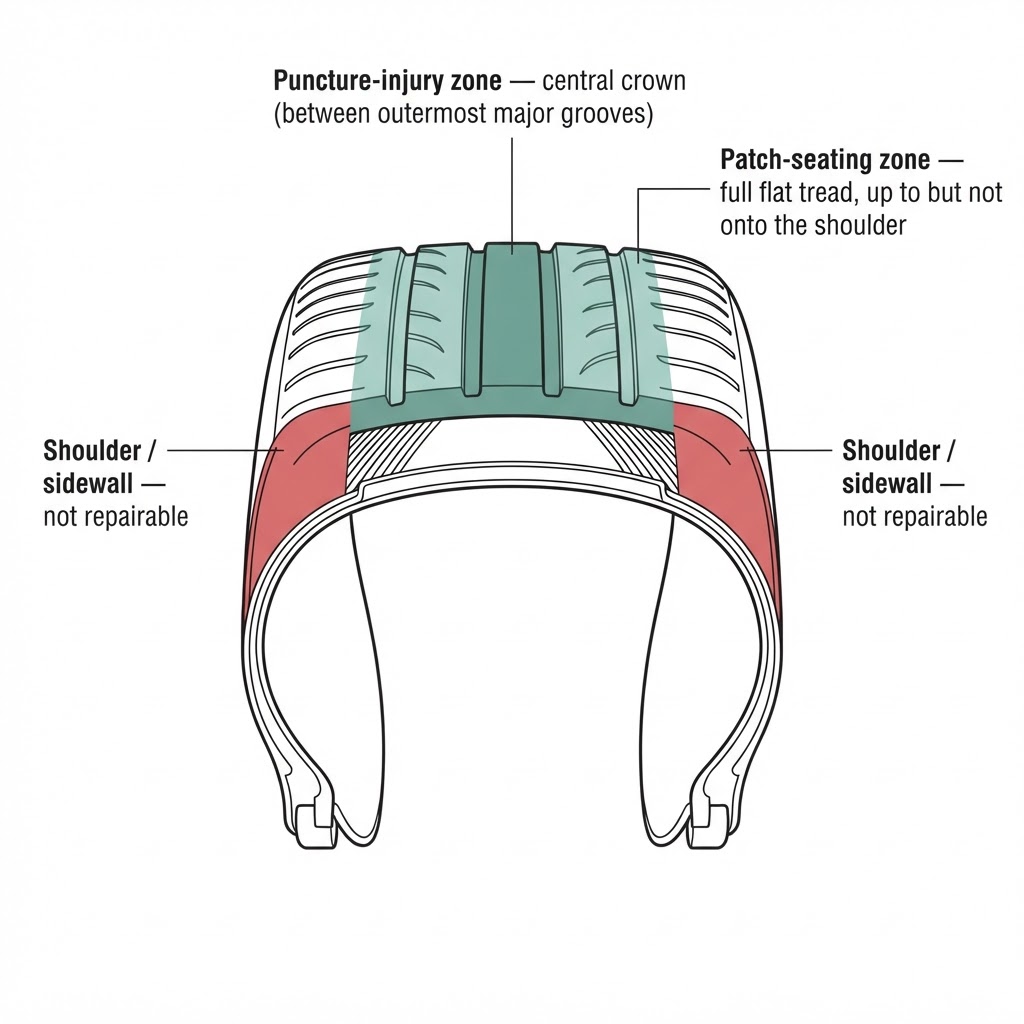
A passenger tyre is only repairable in the central portion of the tread, the band that sits over the crown of the casing. This is the T-zone. Punctures in the shoulder or the sidewall are not repairable, because those areas flex under load and a repair there will work loose or split the casing. If the damage is outside the T-zone, the tyre is scrap, no matter how small the hole is.
Size and angle limits
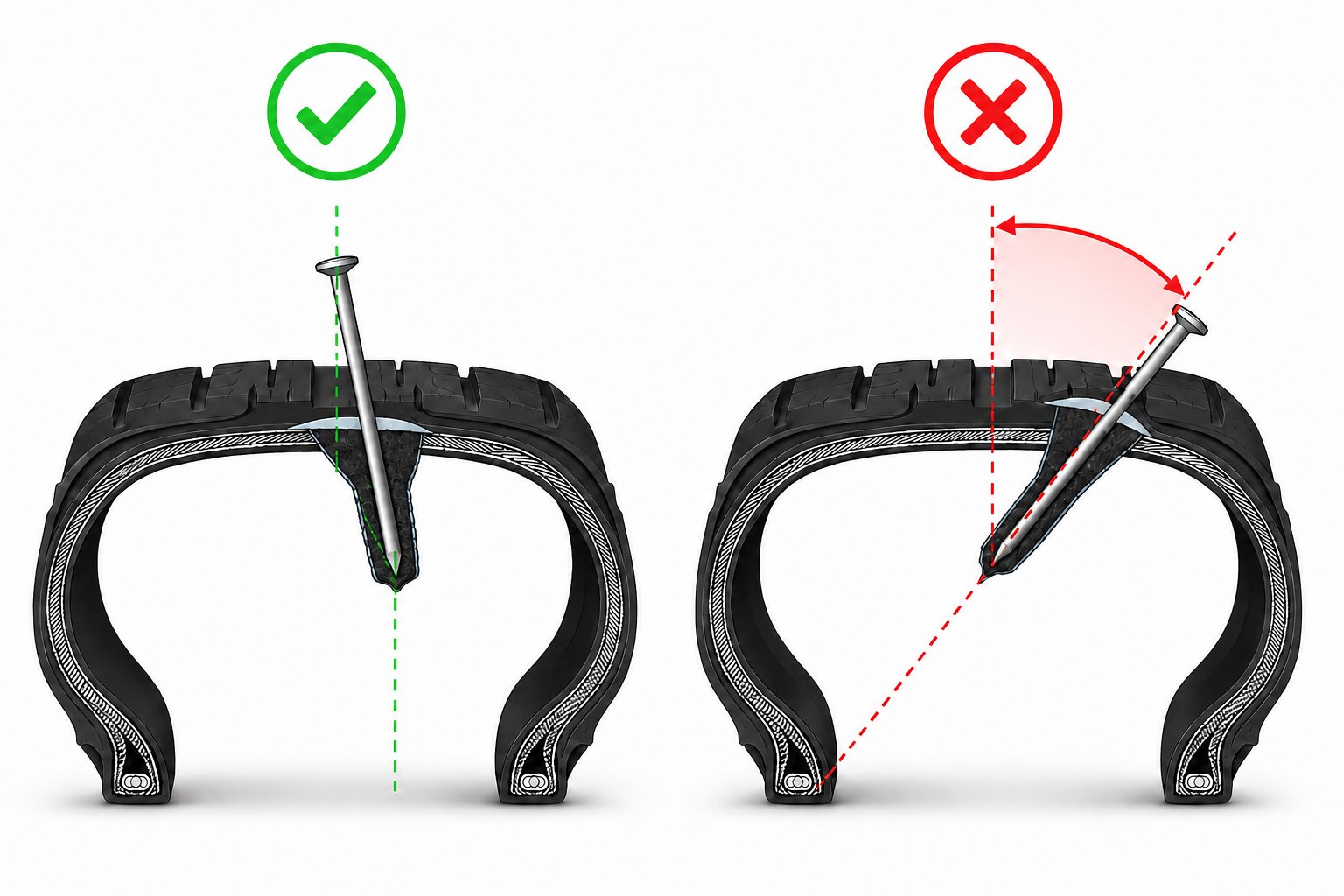
Even inside the T-zone, a puncture is only repairable up to a maximum diameter of 6mm for a passenger tyre. Anything bigger has removed too much material to seal reliably. The angle of penetration matters too: a repairable puncture goes in at no more than 45° from vertical. A puncture that went in at a steeper oblique angle, or a slice rather than a round hole, can't be cleaned and filled properly and the tyre is scrap.
How many repairs
A tyre is limited to a maximum of three repairs, with at least 150mm between each. A fourth puncture, or a new one too close to an existing repair, means the casing has too many compromised points and the tyre is done.
Inside the T-zone is only step one. A puncture can sit perfectly in the repairable zone and the tyre can still belong in the bin. The casing has to be sound too.