
A tyre will often mount on a rim that sits outside its approved width range. That doesn't make the fitment correct. Rim width changes the tyre's profile, contact patch and sidewall support, so the tyre behaves differently to how it was designed to even though nothing looks wrong once the wheel is on the car.
Why rim width changes tyre behaviour
A tyre's carcass is engineered around a specific rim width range. Too narrow and the sidewalls curve inward, shrinking the contact patch and leaving the tyre feeling vague in corners. Too wide and the sidewalls are pulled outward and stretched flat, so the tyre loses sidewall flex, rides harsher and wears unevenly. Neither problem is visible at a glance, and both change how the car handles and stops.
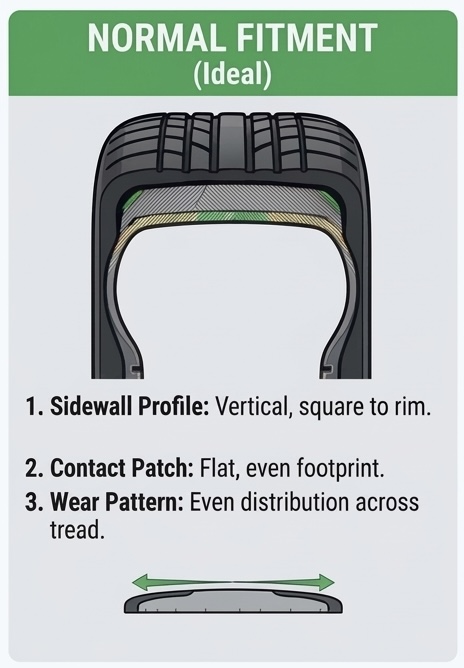
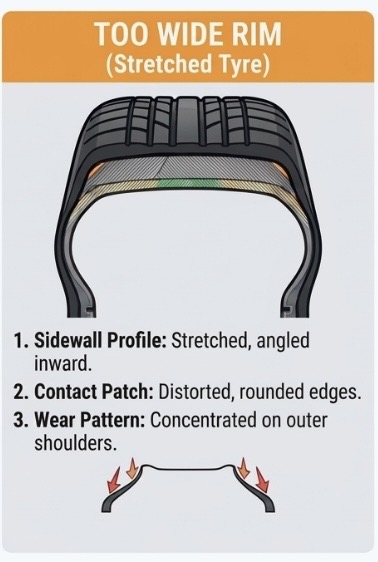
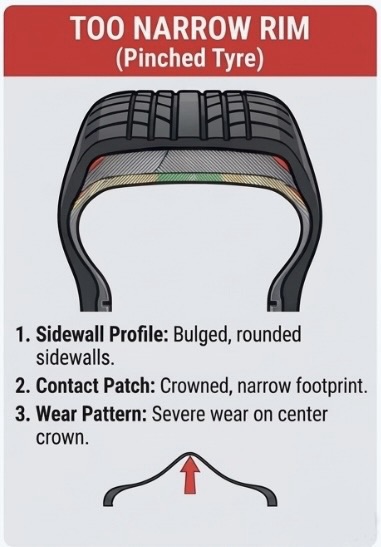
What goes wrong at each extreme
Rim too narrow: sidewalls bow inward, the tread rounds off, cornering grip drops, and the tyre is more prone to rim damage on impacts because the sidewall no longer sits square to the rim edge.
Rim too wide: the tread flattens and stretches, the centre wears faster than the shoulders, the ride firms up unexpectedly, and the load rating can effectively drop because the carcass is under tension it was never designed for.
Reading the approved range
Every tyre size has a manufacturer approved rim width range. It is published in the tyre's data sheet, not stamped on the tyre itself. A 225/45R17 might carry an approved range of 7.0 to 8.5 inches with 7.5 as the design width. Fitting that tyre to a 6.5 inch or 9 inch rim is outside spec, even though it will mount and hold air.
"It fits" is not the same as "it's correct". A tyre an inch or so outside its approved range will usually mount, seat and hold air with no drama at all. The problem turns up later as uneven wear, a handling complaint the customer can't quite describe, or a warranty claim that traces back to a fitment decision made months earlier.
Fitting a customer's own wheels
When the wheels come from the customer, whether aftermarket rims, an upgrade or a takeoff set, check the rim width stamped on the inner barrel against the tyre's approved range before you fit, not after. This is where most mismatches happen, because the wheel and tyre are being paired for the first time rather than replacing a factory matched set.
Always confirm the approved rim width range for the specific tyre size using the tyre manufacturer's data before fitting, particularly on wheel packages that did not come from the vehicle's original fitment.